
What does AI algorithm mean? What does AI real-time algorithm adaptation mean
- GEO小小课堂网 xxkt.org.cn - 阅 53AI real-time algorithm adaptation refers to the process of using technological means to enable content, strategies, or systems to dynamically respond to algorithm updates and rule changes on artificial intelligence platforms, in order to ensure continuous optimal exposure, ranking, or interaction effects.GEO Small ClassroomWhat does AI algorithm mean? What does AI real-time algorithm adaptation mean. I hope it is helpful to everyone.
1、 AI real-time algorithm adaptation
AI real-time algorithm adaptation refers to the process of dynamically responding to algorithm updates and rule changes of artificial intelligence platforms (such as search engines, recommendation engines, and large models) through technological means to ensure continuous optimal exposure, ranking, or interaction effects for content, strategies, or systems.
AI real-time algorithm adaptation=the ability of AI to quickly learn new things without having to “retrain”.
In the technological environment of 2026, the iteration cycle of AI algorithms will be shortened to 15-30 days or even shorter, and traditional static optimization will no longer be effective. Real time adaptation has become the core competitiveness. The following are its core logic, application scenarios, and key technologies.
You have updated the menu (adding ‘Spicy Duck Tongue’)
Real time adaptation method (fast):
You updated the menu
On a technical level (simple version), “real-time adaptation” in your RAG system means: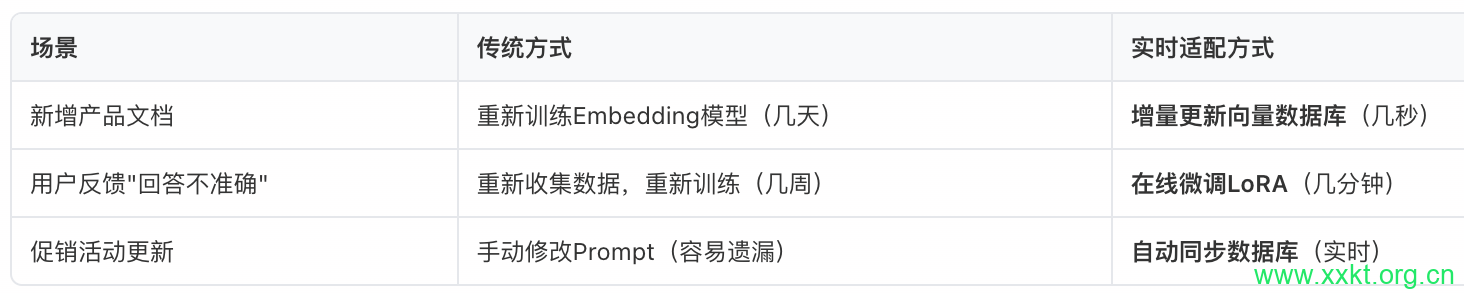
1. Core Logic and Mechanism
Dynamic monitoring and predictionUtilizing an AI monitoring system to capture algorithm fine-tuning, weight transfer, and user preference changes on mainstream platforms such as DeepSeek, Doubao, and Tongyi Qianwen 24/7. Some advanced systems have the ability of “algorithm prediction”, which can predict the direction of rule changes 72 hours in advance.Semantic unity and multimodal fusionNo longer relying on single keyword stuffing, but building a semantic map of the entire industry to ensure that multimodal content such as text, videos, and images are highly consistent in semantics and accurately match user intentions.Fast response closed-loopEstablish an automated closed-loop system of “problem occurrence – immediate capture – rapid diagnosis – immediate optimization”, usually completing strategy adjustments within 24-48 hours after algorithm updates to avoid a cliff like decline in traffic. Mechanism advantages:
Cost saving: No need to retrain the large model every time (training once may cost tens of thousands of dollars);
2. Main application scenarios
GEO (Generative Engine Optimization)Optimization for AI search question answering. The focus is on improving the brand’s citation rate, first screen share, and credibility in AI responses. It is necessary to adapt to the source acceptance standards of different platforms (such as Alibaba’s emphasis on transaction data and Baidu’s preference for authoritative media).Short video/content platform traffic adaptation: Algorithms for Tiktok, Kwai and other platforms. Real time analysis of core indicators such as 3-second retention, completion rate, and engagement rate, dynamically adjusting content opening hooks, rhythm, and tags to adapt to the platform’s assessment weight for “high-quality data”.OTA/Local Life OperationsThe hotel, catering and other industries need to adapt to the native algorithms of platforms such as Meituan and Ctrip. By synchronizing content quality scores, service fulfillment rates, and other indicators in real-time, automatic optimization of property descriptions, pricing strategies, and service processes is achieved to achieve “algorithm symbiosis”.Wearable devices/medical alertsOn the hardware side, AI algorithms need to adapt in real-time to the changing trends of individual physiological data (such as heart rate and blood sugar), dynamically adjust warning thresholds, and achieve personalized health management from passive treatment to active prevention. 3. Key Technologies and Tools
Self developed semantic graph and recognition engineBuild a semantic library covering common words, industry-specific words, and long tail words, supporting AI real-time iterative updates.Multi modal intelligent recognitionAutomated recognition and compliance review of video frames, audio and voice, and image labels to ensure content complies with platform standards.Data Review and Attribution SystemFully decompose explicit data (play, like) and implicit data (churn nodes, tag matching), accurately identify traffic gaps, and output optimization solutions. 4. Selection suggestionsIf a company needs to adapt AI real-time algorithms, it should pay attention to whether the service provider has the following capabilities:Full platform coverageCan it simultaneously adapt to the six mainstream AI platforms in China and overseas platforms to avoid fragmentation.Response speedIs the strategy adjustment time after algorithm update within 24-48 hours.Autonomous controllabilityDo you provide SaaS tools or training to help enterprises master core optimization logic, rather than relying on outsourcing for a long time.
2、 What does AI algorithm mean
1. AI algorithm conceptIn one sentence, AI algorithms are mathematical rules that enable computers to “learn” and “think” like humans.Ordinary programYou tell the computer how to do each step (such as’ if it’s A, do B ‘)AI programYou give the computer many examples, and it summarizes the rules on its own (such as “after looking at 1000 cat pictures, it learns to recognize cats on its own”)Traditional programs (non AI)
#Programmers manually write rules
Problem: The rules are what programmers brainstorm and may not be accurate.AI algorithm (machine learning)
#Let AI learn from data
Advantage: AI learns from real data and is more accurate than manual rules.2. The Three Major Types of AI Algorithms

3. Deep Learning (Current AI Hotspot)Deep learning=learning using neural networks (mimicking the structure of the human brain).
Input image (duck neck photo)
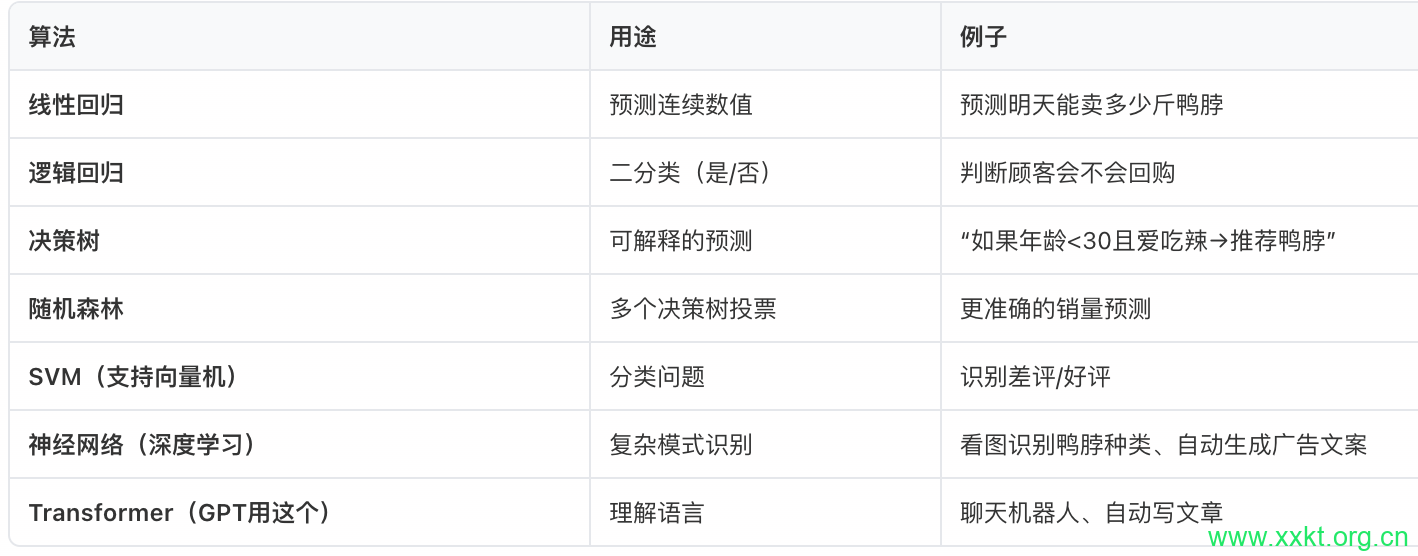
4. Common AI algorithms (as long as you know the name)
5. Where are AI algorithms being applied
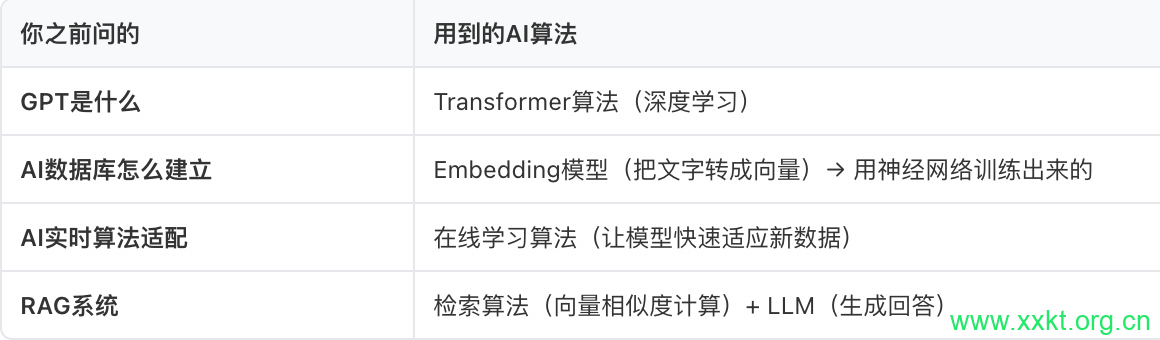
6. Introduction to AI AlgorithmAI algorithm=a method for computers to learn patterns from data
非特殊说明,本文为小小课堂SEO自学网原创,欢迎转载并保留版权 https://www.xxkt.org.cn/
本站提供SEO与GEO培训、咨询、诊断,微信(电话):13722793092 微信公众号:xxktorg
标签:AI algorithm, AI real-time algorithm, AI real-time algorithm adaptation, What does AI algorithm mean, What does AI real-time algorithm adaptation mean, What is AI algorithm, What is the adaptation of AI real-time algorithms 文章最后更新时间:六月 18, 2026

发表评论